Why Well Water Turns Ocala Paver Driveways Orange (and How to Fix It)
The orange staining is iron oxide left behind when iron-rich well water evaporates off the paver surface. It is extremely common across Marion County because so many properties run irrigation on private wells. Regular pressure washing will not remove it. It needs a chemical treatment specific to iron staining.
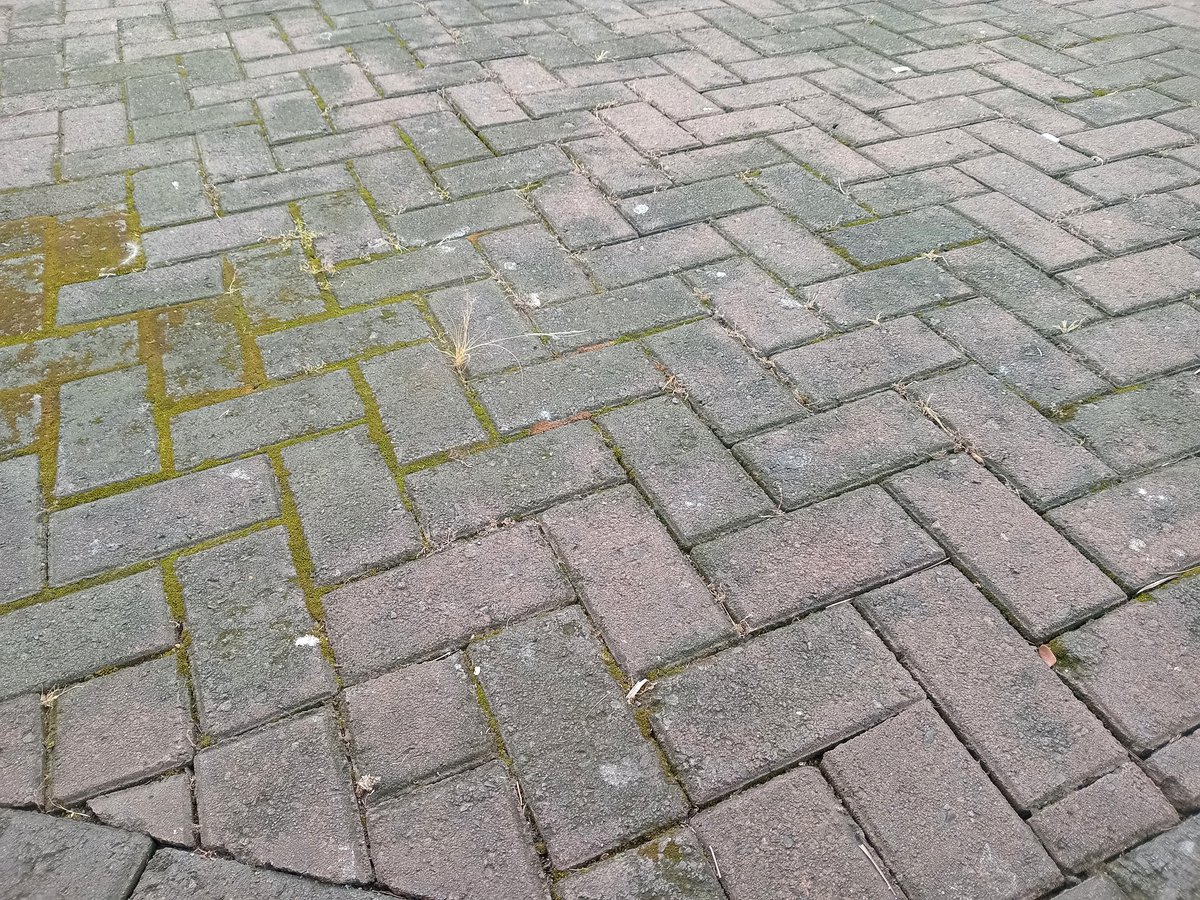
Why is my paver driveway turning orange?
The orange stains on your pavers are iron oxide. Every time your sprinklers spray well water onto the driveway and it dries in the sun, the water evaporates and leaves behind a thin layer of dissolved iron. Over weeks and months, those layers build up into a visible orange stain.
The stain pattern tells you the source. If the orange is concentrated along the edges of the driveway where sprinkler heads sit in the lawn, it is almost certainly well water. If the orange appears in the middle of the driveway away from any sprinkler, it could be fertiliser residue or something else. But edge staining near turf is well water rust nine times out of ten in this county.
The iron is dissolved in the water when it comes out of the ground. It is invisible in the water itself. You only see it after the water evaporates and the iron oxidises on the paver surface. That is why the stains get darker and more obvious during dry weather when the sprinklers run more often and evaporation is faster.
Why is this so common in Marion County?
Marion County sits on a limestone aquifer. The groundwater here naturally contains iron. When you drill a well, the water that comes up has been in contact with iron-rich rock for thousands of years. It picks up dissolved iron and carries it to the surface.
Private wells are standard across large parts of the county. In Marion Oaks, nearly every property runs on a private well. The same is true across Ocklawaha, Fort McCoy, Anthony, Citra and the horse farm areas west and north of Ocala. These communities have thousands of driveways being watered by iron-rich irrigation every day.
Marion Oaks is the area where we see this most often. The combination of private wells, sandy soil that drains fast and requires frequent watering, and large open driveways with full sun exposure creates the perfect conditions for rust staining to build up fast. Some driveways in Marion Oaks go from clean to noticeably orange within a single summer.
Why won't pressure washing remove rust stains?
Pressure washing removes surface dirt. Iron oxide is not surface dirt. It is a mineral bond that forms when dissolved iron contacts the paver and oxidises in place. The iron chemically attaches to the paver surface. Water pressure, no matter how high, cannot break a chemical bond.
You can pressure wash a rust stain and it will look lighter while it is wet. Then the water dries and the orange comes right back. What you are seeing is the stain still embedded in the paver, temporarily hidden by moisture. The water washed nothing away. It just made the stain invisible for a few hours.
Worse, aggressive pressure washing on pavers with failing joint sand will blast the sand out of the joints and accelerate paver settlement. This is the second most common thing we see in Marion Oaks after the rust itself: driveways where someone tried to pressure wash the orange away and stripped the joints bare in the process.
How rust staining is actually removed
Iron oxide removal on pavers requires a specific chemical treatment. The process uses an acid-based cleaner formulated for iron stains on masonry. It reacts with the iron oxide and breaks the chemical bond. The stain lifts out of the paver rather than being scrubbed off the surface.
The treatment is applied directly to the stained areas, left to dwell and then rinsed. On heavy staining, a second application is sometimes needed. The process does not damage the paver surface when applied correctly. It targets the iron, not the concrete.
After the rust is removed, the whole surface gets a deep clean to even out the colour. Then joints are re-sanded and the surface is sealed. This sequence matters. If you treat the rust and skip the seal, the untreated bare pavers will re-stain within weeks of the next sprinkler cycle.
How to stop it coming back
The rust will come back unless you change something. Here are the four things that make a difference, in order of effectiveness.
Seal the pavers. This is the most important step. A sealed paver surface is non-porous. Water beads on top and evaporates without leaving iron behind in the paver pores. Sealing after rust removal stops new iron from embedding in the surface. It does not stop the sprinklers from hitting the driveway. It stops the iron from sticking.
Aim the sprinkler heads. Many rust problems are concentrated along a two-foot strip at the driveway edge where a single sprinkler head throws too far. Adjusting the head to stop overspray onto the hardscape eliminates the source for that section. This is cheap, simple and surprisingly overlooked.
Shorten the run time. Long irrigation cycles that leave standing water on the driveway edge give iron more time to settle. Shorter, more frequent cycles reduce pooling and give less time for iron to deposit. Combined with head adjustment, this can cut the rust rate by more than half.
Iron filtration on the irrigation line. This is the most thorough fix but also the most expensive. A whole-system iron filter on the well output removes the iron before the water reaches the sprinklers. It is worth considering if you have severe iron staining across the whole property and not just the driveway. But for most homeowners, head adjustment plus sealing is the practical solution.
Does sealing prevent rust stains?
Yes. Sealing after rust removal is the single most effective thing you can do to prevent future staining. The sealer fills the paver pores and creates a surface that iron-rich water cannot penetrate. The water sits on top as beads and evaporates, leaving the iron on the surface where it can be rinsed away with rain or a light hose.
Unsealed pavers are porous. The water soaks in, the iron stays in the pores and the stain builds from the inside. That is why pressure washing does not work. The iron is not on the surface. It is inside the paver. Sealing changes the equation entirely by closing the pores.
A driveway in Marion Oaks that gets cleaned, rust treated and sealed will stay clean for years with occasional light rinsing. The same driveway cleaned without sealing will show orange again within a month. The cleaning does the work. The sealing makes it last.
Quick Answers
Iron oxide left behind when well water from your sprinklers evaporates off the paver surface. The iron is dissolved in the groundwater and invisible until the water dries.
No. The stain lightens while wet but returns when dry. Iron oxide bonds chemically to the paver. It needs a specific chemical treatment to break that bond. Pressure washing also strips joint sand out of unsealed driveways.
Yes, unless you seal the pavers after cleaning. Sealing closes the pores so iron cannot embed in the surface. Adjusting sprinkler heads to stop overspray onto the driveway also helps. Without sealing, the stains return within weeks.
Marion Oaks has the highest concentration of well-water rust staining we see. Ocklawaha, Fort McCoy, Anthony and Citra are also heavy private-well areas with the same issue. The horse farm properties west and north of Ocala deal with it on barn aprons and entry drives too.
Related Posts
Related services:
Free Quote in 24 Hours
Rust stains on your pavers? We'll assess it and give you a clear quote within a day.
Or call us directly
352-789-0363