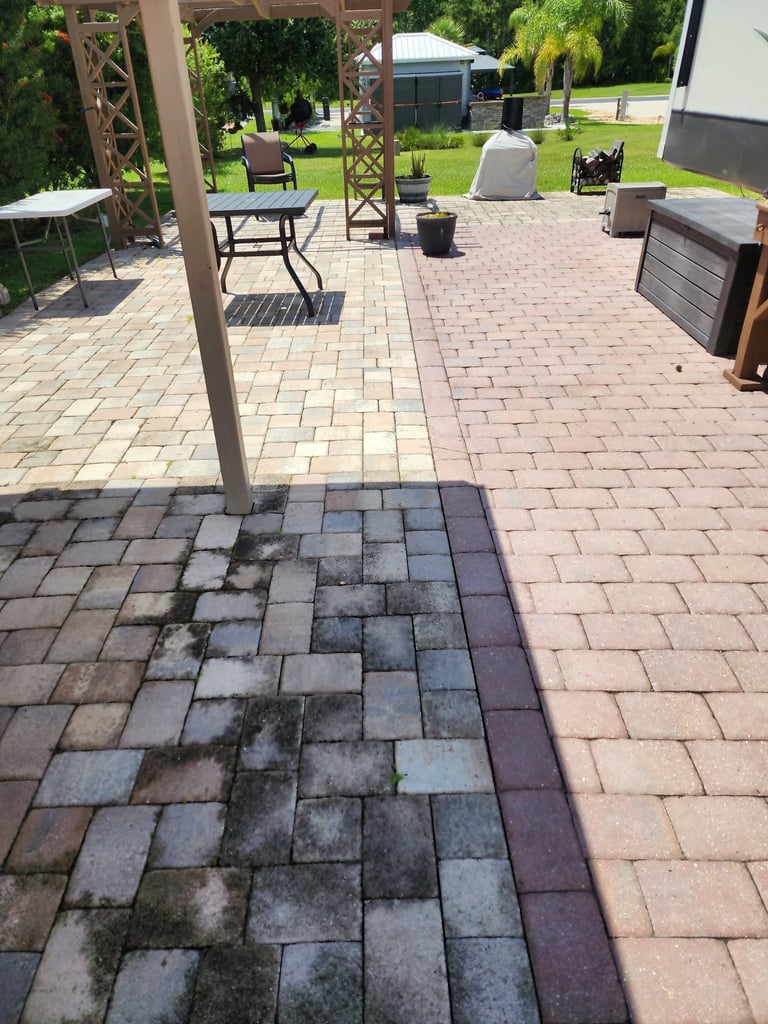
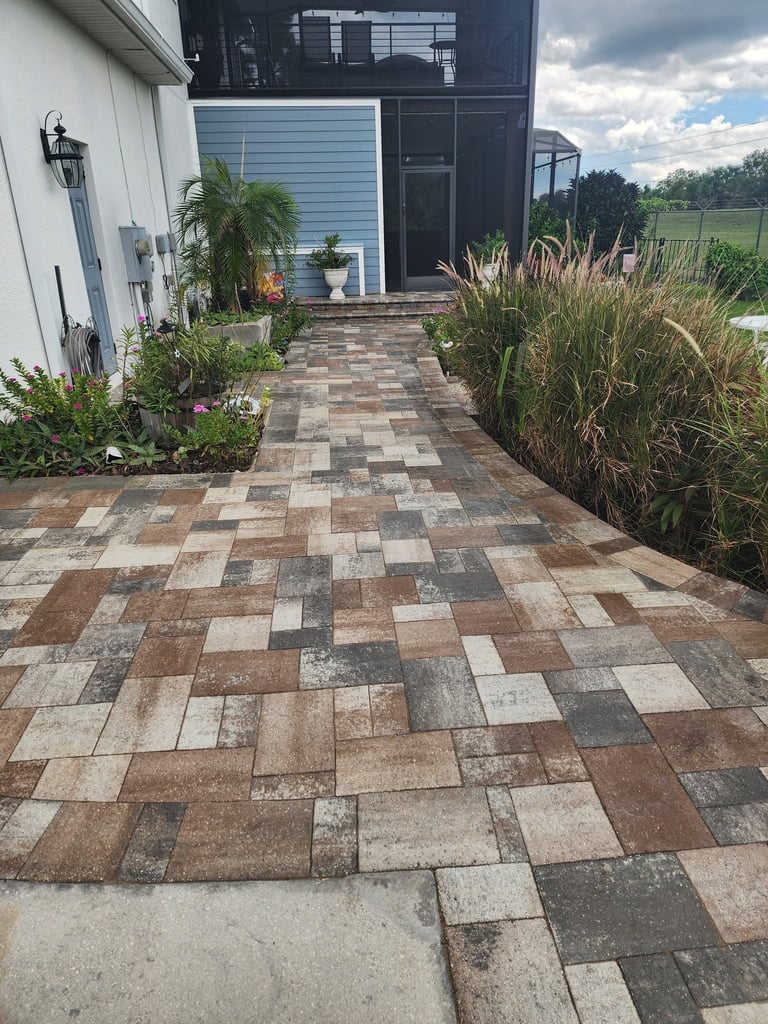
Paver sealing puts a protective coating over cleaned and re-sanded pavers. It locks the joint sand in place, blocks UV fading from the Florida sun, resists oil and rust staining, and brings the original colour back. S&S seals driveways, patios and pool decks across Marion County with 5 to 7 year protection.
Fill out the form and we'll get back to you within 24 hours with a personalized quote for your paver sealing project.
Prefer to call us directly?
352-789-0363Sealing isn't just about making pavers look wet. It's a protective layer that does four specific jobs — and in Florida's sun and rain, every one of them matters.
Florida sun is brutal on pavers. Unsealed pavers fade to a chalky grey in two to three years. The sealer acts like sunscreen, blocking UV rays that break down the paver surface and bleach out the colour.
Sealer brings back the colour your pavers had when they were new. The pigment that looked permanently faded is still there — the sealer draws it out and deepens the tone. Even tan and brown pavers that looked washed out go rich again.
Unsealed pavers are porous. Oil drips from cars, rust from metal furniture, leaf tannins and barbecue grease all soak straight in. Sealer creates a barrier on the surface so spills sit on top instead of penetrating.
The sealer bonds with the joint sand and locks it in place. This is what stops the sand from washing out during Florida's heavy summer rain. Without seal, freshly sanded joints will start eroding within a single rainy season.
You choose how your pavers look after sealing. Each finish has a different sheen, and the right one depends on your style and your community.
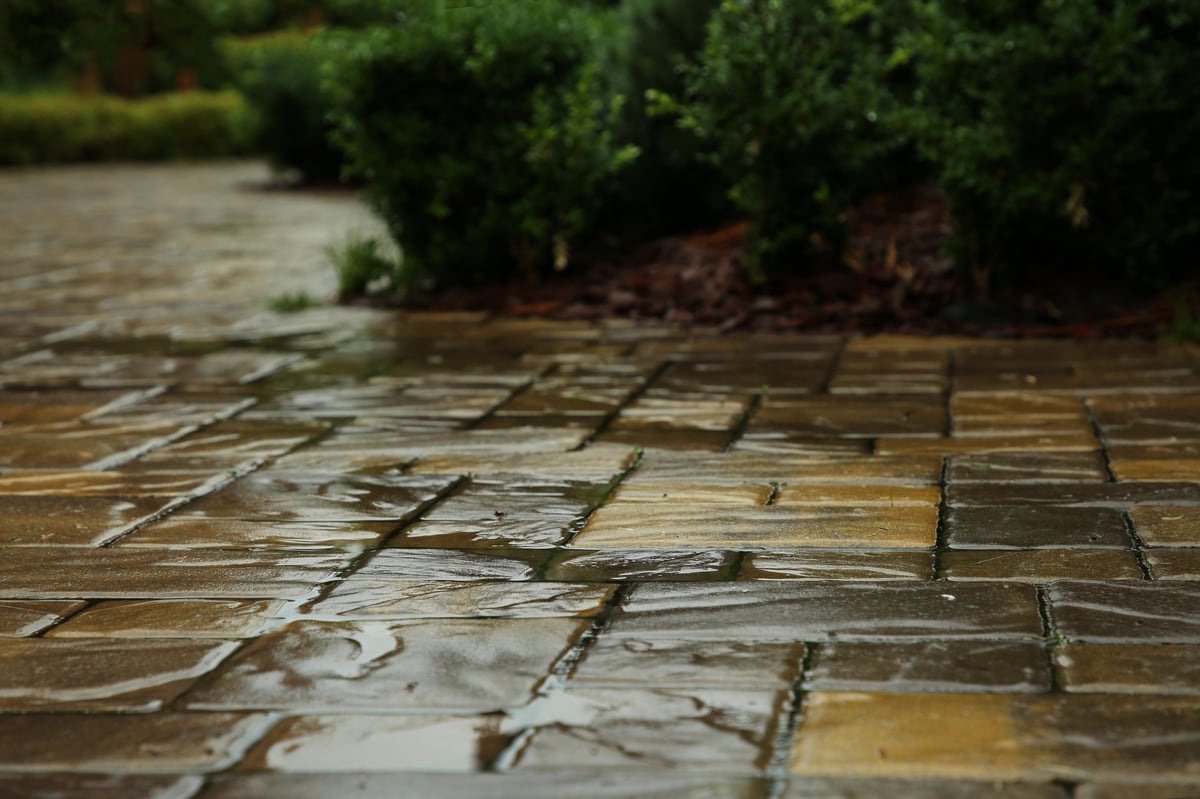
High sheen, deep colour saturation. Looks like the pavers are permanently damp. The richest colour enhancement of the three. Popular on newer homes in Ocala where the driveway is a feature. Some HOA architectural review boards in Marion County communities prefer or require a specific sheen level — we'll match what your community expects.
Low sheen, natural appearance. The colour comes through but without any gloss. The most popular choice in Marion County — looks clean and protected without drawing attention to the seal itself. Works well on older homes and larger surfaces where a glossy finish would feel too loud.
No visible sheen at all. The protection is there but the pavers look exactly as they did before sealing — just cleaner. Chosen most often for pool decks where glare matters, and for historic or cottage-style properties where a shiny driveway would look out of place.
Not sure which finish to pick? We'll bring samples and show you how each one looks on your actual pavers. That way you see the real thing before we start, not a photo of someone else's house.
Sealer needs dry conditions to cure properly. Get the timing wrong and you get a cloudy, peeling mess. This is the number one reason seal jobs fail in Central Florida.
From June through September, Marion County gets afternoon thunderstorms nearly every day. If rain hits wet sealer before it cures — even four or five hours after application — the finish clouds up, turns white, or peels within weeks. That's why we won't schedule sealing work when the forecast shows rain within 48 hours.
Spring (March through May) and autumn (October through November) give the most reliable conditions. Lower humidity, fewer afternoon storms, and moderate temperatures that let the sealer cure evenly. These are the months where we book fastest.
Many of our customers in communities like The Villages, Del Webb Stone Creek and On Top of the World schedule sealing just before heading north in April, or right after returning in October. Both windows work — we hold slots for seasonal clients who book ahead.
"We watch the weather radar more carefully than anyone. If the forecast turns, we reschedule. A delayed job is better than a failed seal."
A bad seal job looks worse than no seal at all. These are the four most common failures we see in Marion County — and we fix all of them.
Moisture trapped under the sealer during application. This happens when sealer goes down on damp pavers, or rain hits before the sealer has cured. The finish turns milky white and won't go away on its own — the only fix is to strip it and start over.
Too much sealer applied in one coat, or sealer applied over dirty pavers. The coating can't bond to the surface and starts lifting within months. You'll see clear patches peeling up like sunburned skin, especially on high-traffic areas.
Uneven application that leaves some areas glossy and others dull. Common when sealer is rolled on instead of sprayed, or when the applicator rushes and misses sections. The colour variation is especially noticeable on larger driveways.
Sealer applied without re-sanding first. The finish sits on top while the joints underneath remain empty. Water, weeds and ants get in through the exposed edges. The seal fails from underneath and there's no way to fix it without stripping everything off and starting fresh.
If another company sealed your pavers and the finish has gone wrong, S&S strips and redoes it properly. We remove the failed sealer, clean and prep the surface, re-sand the joints if they need it, and apply a fresh seal that cures correctly. It's more work than starting from scratch, but the result is a finish that actually lasts.
Every sealing job follows the same three steps. Nothing gets skipped.
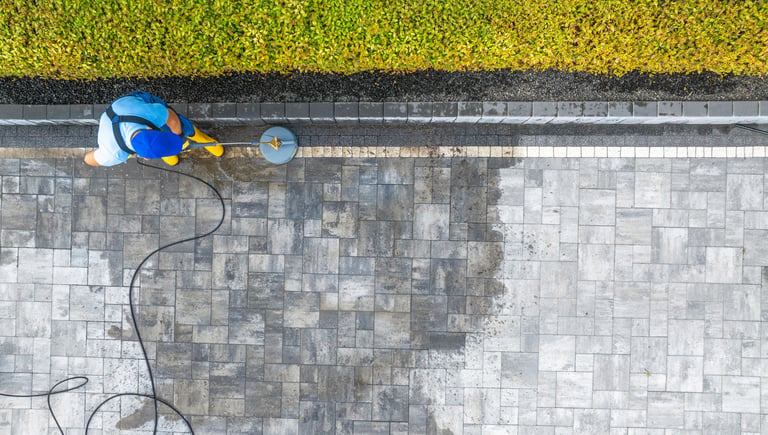
We deep-clean the entire surface to remove dirt, algae, old sealer residue and anything that would stop the new seal from bonding. A dirty surface means a failed seal, so this step gets the most time.
If the joints need it, we re-sand before sealing. Sealer over empty joints is a finish on a failing surface. We fill and level every joint so the seal bonds across a complete, solid surface.
We apply the sealer in even coats using professional spray equipment, checking the weather window before we start. The finish cures to a hard protective layer that locks in colour, blocks stains, and holds the joint sand in place.
Also serving Lake County, Sumter County and Alachua County.
500+ projects completed across Marion County. Sealed right, every time.
Three years of Florida sun had faded these pavers to a chalky grey. Joint sand was washing out with every rain. The pavers were solid but looked twenty years old.
After deep cleaning, joint sand replacement and a matte-finish seal. Colour came right back, joints are solid, and the surface resists stains and rain.
"Our driveway pavers were so faded you couldn't even tell what colour they used to be. S&S cleaned them, re-sanded the joints and sealed them with a matte finish. They look better now than when the house was built. Three years later and they still look exactly the same."
— Homeowner in Ocala, FL
Get answers to common questions about paver sealing in Florida.
In Florida, pavers should be resealed every 3 to 5 years depending on sun exposure, foot traffic and the type of sealer used. Driveways with full southern exposure may need resealing closer to 3 years. Pool decks and shaded patios often go 5 years or more. We can assess your existing seal and tell you exactly where you stand.
With proper surface preparation and the right sealer for your pavers, expect 5 to 7 years of protection before resealing is needed. That's the window we design for. Cheaper sealers applied over dirty pavers can fail in under 2 years, which is why prep work matters more than the product label.
Not when applied correctly. A properly sealed paver surface has grip comparable to unsealed pavers. Pool decks are the one place we pay extra attention — we use a finish that meets slip-resistance standards for wet areas. If you've seen slippery sealed pavers somewhere, that's a sign of too much sealer in one coat, not the sealer itself.
It comes down to personal taste and your community's rules. Wet look gives the richest colour and a glossy finish that makes the driveway a focal point. Matte keeps the protection while looking more natural. If your HOA has a preference, we match it. If you're unsure, we bring samples and show you both on your actual pavers before we start.
Yes. We strip failed sealer, clean the surface thoroughly, re-sand the joints if needed, and apply a fresh seal that's applied correctly and cured in the right conditions. It's more work than a first-time seal, but the result is a finish that won't fail again. We do these jobs regularly across Marion County.
You can walk on sealed pavers within a few hours of application. For vehicles, we recommend waiting 24 to 48 hours to let the sealer fully cure. We'll give you the exact window based on the weather conditions on the day we finish. Parking too soon can leave tire marks in the finish that won't come out.
Sealing alone helps but isn't enough on its own. The seal covers the surface but can't fill empty joints. The combination of re-sanding the joints with polymeric sand and then sealing is what stops weeds for years. The sand blocks the root path, and the seal locks the sand in place.
Spring (March through May) and autumn (October through November) are best. These months have lower humidity, fewer afternoon storms, and moderate temperatures that let the sealer cure evenly. We seal year-round but watch the forecast closely — we won't apply sealer if rain is expected within 48 hours.
Related services:
Free quote, honest assessment, no pressure. We'll tell you what finish suits your pavers best and what it will cost. Most jobs done in 1 to 3 days.