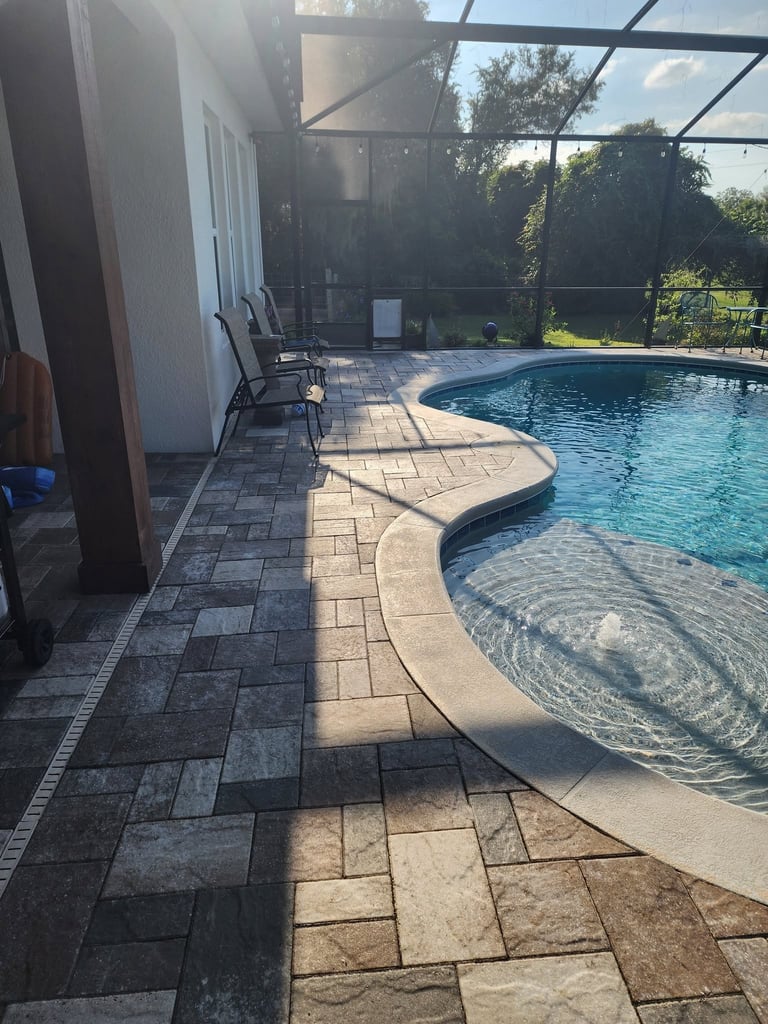
Pool deck pavers face chlorine, salt, constant wet-dry cycling and full Florida sun. Sealing protects against that chemical attack and staining, and the right finish keeps the surface slip resistant when wet. S&S seals pool decks across Marion County, matching the finish to how the deck is actually used.
Fill out the form and we'll assess your pool deck. Slip-resistant finish matched to your deck. Free quote in 24 hours.
Prefer to call us directly?
352-789-0363
This is the first question every pool owner asks. The short answer: no, not when it's done right.
A fine grip additive goes into the sealer before it's applied around pools. It creates a textured surface that stays grippy when wet. You cannot see it, but you can feel it underfoot. This is standard practice for any pool deck job we do. We don't charge extra for it.
We use a natural or matte finish on pool decks rather than a high-gloss wet look. Lower sheen means better grip. The protection is the same regardless of the finish. You get the full chemical resistance and colour enhancement without any compromise on safety.
Too much sealer in one coat can fill the natural texture of the paver and create a smooth surface that gets slick when wet. We apply thin, even coats that protect without flattening the surface profile. The paver texture stays intact and the grip stays with it.
If you've seen a slippery sealed pool deck somewhere, that's a sign of the wrong finish or too heavy an application. Not the sealer itself.
A pool deck gets hit with chemicals no other paved surface on your property deals with. Here's what each one does to unsealed pavers.
Chlorinated splash-out and deck spray sit on the pavers and dry in the sun. The concentrated residue is slightly acidic. Over a single summer, it etches the paver surface and leaves a bleached ring around the pool edge. Unsealed pavers absorb it straight in. Sealed pavers shed it.
Salt water pools are common in Marion County. Salt crystallises on the paver surface as water evaporates. Those crystals are abrasive and chemically reactive. They wear down the paver surface and accelerate fading. Salt also draws moisture from the air, keeping the deck damp longer and encouraging algae.
Pavers around a pool go from soaked to baked multiple times a day during summer. Water soaks in, the sun dries it, and the expansion and contraction cycle slowly breaks down the paver surface. Sealer blocks the water from penetrating in the first place, breaking the cycle.
Pool decks get full sun and people walk on them barefoot. The surface temperature matters.
Sealer does not make pavers hotter than they already are. The surface temperature of a paver in full Florida sun is determined by the colour of the paver itself, not by the sealer. Lighter coloured pavers stay cooler. Darker pavers get hotter. That's true sealed or unsealed.
The finish you choose (wet look, matte or natural) has no measurable effect on surface temperature. What does matter is how the pavers feel to walk on after the sealer cures. A natural or matte finish gives the most comfortable barefoot experience, which is why we recommend it for pool decks.
If heat is a concern, we can discuss cooler colour options and the right finish for your deck during the on-site assessment.
Pool decks lose joint sand faster than any other paved area on the property. Here's why, and what to do about it.
Every cannonball, every lap, every kid jumping in sends water across the deck. That water hits the joints and flushes sand out grain by grain. Over a summer of daily use, the joint sand around the pool edge can erode by half an inch or more. That's enough for pavers to start shifting.
Hosing down the deck after a pool party washes loose sand toward the lawn or drains. This is normal maintenance, but on an unsealed deck with loose joint sand, every wash removes material. The joints get shallower each time.
We typically recommend checking pool deck joints every two to three years. The combination of splash-out, deck washing and wet-dry cycling moves sand faster here than anywhere else. Re-sanding before the joints get too low prevents the pavers from shifting and cracking.
When we seal a pool deck, the stabilising sand and the seal work together to lock everything in place. Sand stays put through splash-out, deck washing and daily use.
500+ pool decks across Marion County. Safe, slip-resistant and sealed to handle chlorine, salt and sun.
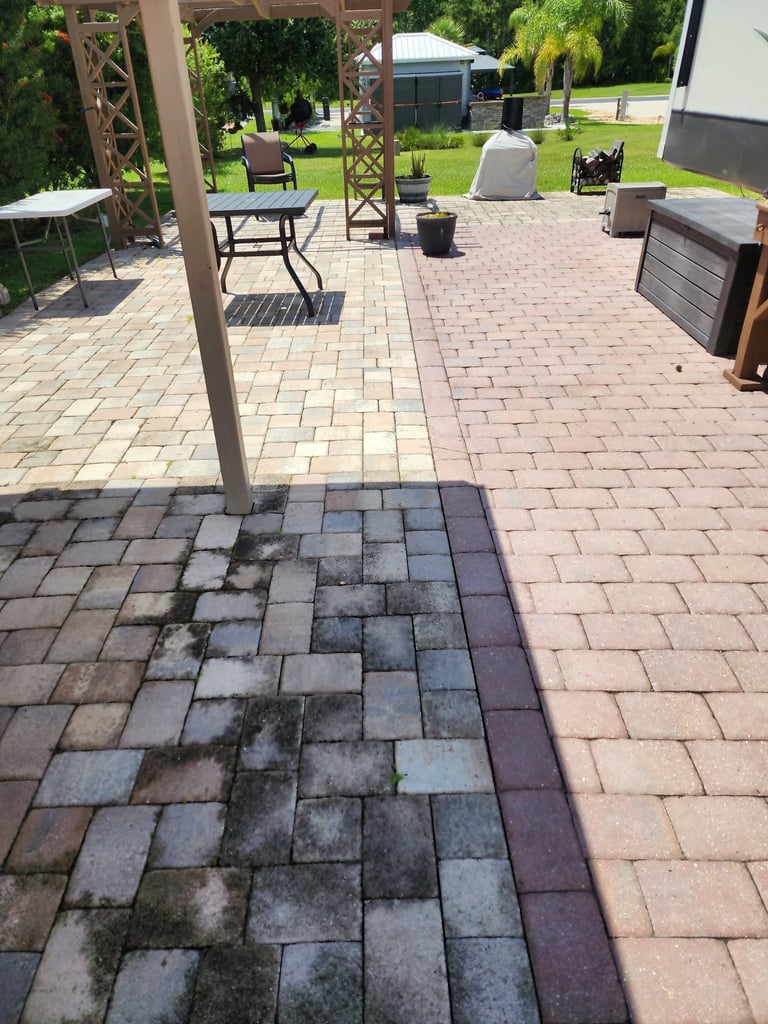
Chlorine bleaching around the edge, joint sand washing into the pool, surface faded to grey. The owners were worried about slipperiness.
Deep cleaned, re-sanded, sealed with a natural slip-resistant finish. Safe for bare feet and kids. Two years later, still going strong.
"I was worried sealing the pool deck would make it slippery with the kids running around. S&S explained the slip-resistant finish and showed us samples. We went with the natural finish and it's perfect. Looks great, not slippery at all, and cleaning the deck is so much easier now."
— Homeowner in On Top of the World, Ocala, FL
Get answers to common questions about pool deck paver sealing and sanding.
No, not when applied correctly. We add a slip-resistant additive to the sealer on every pool deck. It creates a fine texture that stays grippy when wet. We also use a natural or matte finish rather than a glossy wet look around pools. The combination of the additive and the right finish means you get full protection with no loss of grip.
Yes. The sealer creates a barrier that stops chlorine and salt water from penetrating the paver surface. On an unsealed deck, chlorine splash-out etches the pavers and salt water leaves crystals that abrade the surface. Sealed pavers shed both. The protection lasts 5 to 7 years with proper application and curing.
No. The surface temperature of pavers in full sun is set by the paver colour, not by the sealer. Lighter pavers stay cooler. Darker pavers get hotter. That's true sealed or unsealed. The finish choice (wet look, matte or natural) has no measurable effect on temperature. For the most comfortable barefoot experience, we typically recommend a natural or matte finish on pool decks.
Pool decks lose joint sand faster than driveways or patios because of constant splash-out and deck washing. We recommend checking the joints every two to three years. If the sand level has dropped noticeably, a re-sand before sealing keeps the pavers locked together. Catching it early prevents shifting and cracking.
Yes. We work inside screened pool enclosures regularly. We adjust spray pressure and angle to avoid damaging the screen panels and protect the bottom track. The area where the screen meets the pavers gets special attention because that's where water pools and algae builds up worst. The enclosure stays clean and intact.
You can walk on the deck within a few hours of the sealer being applied. The full cure takes longer, and we recommend keeping pool use to a minimum for 24 to 48 hours to let the sealer set properly. The exact window depends on temperature and humidity on the day. We give every customer a specific timeline before we leave.
Related services:
Free on-site assessment. We'll check your joints, test your pavers and recommend the right finish for how your family uses the pool. Free quote in 24 hours.