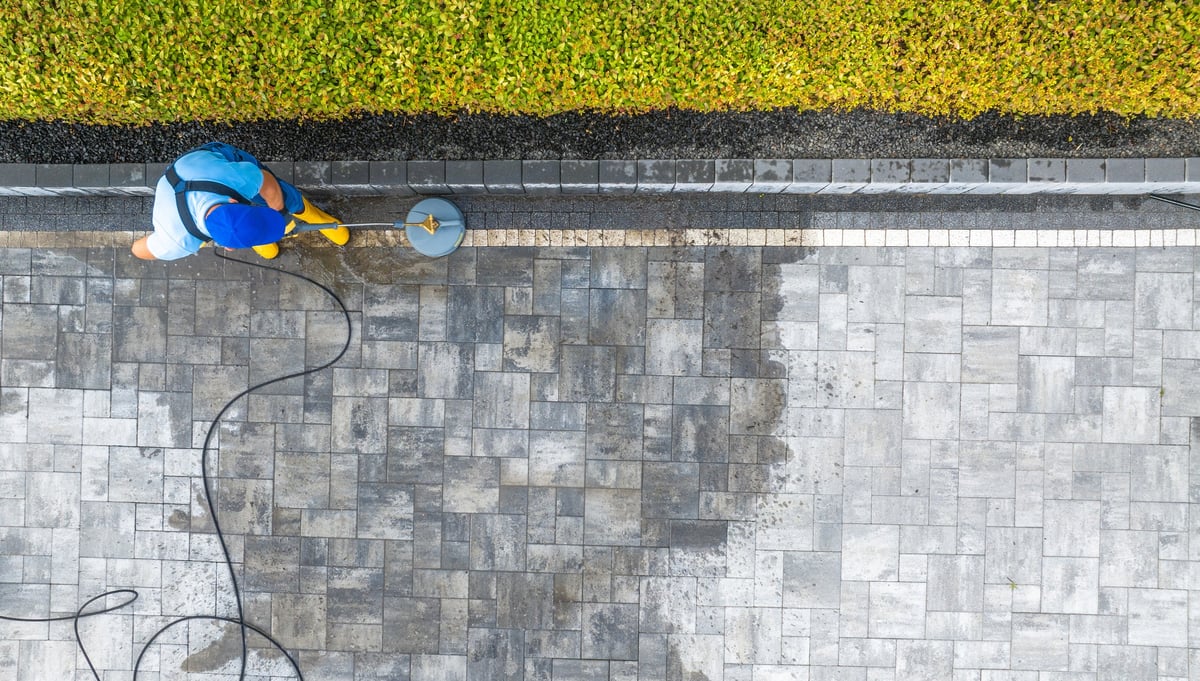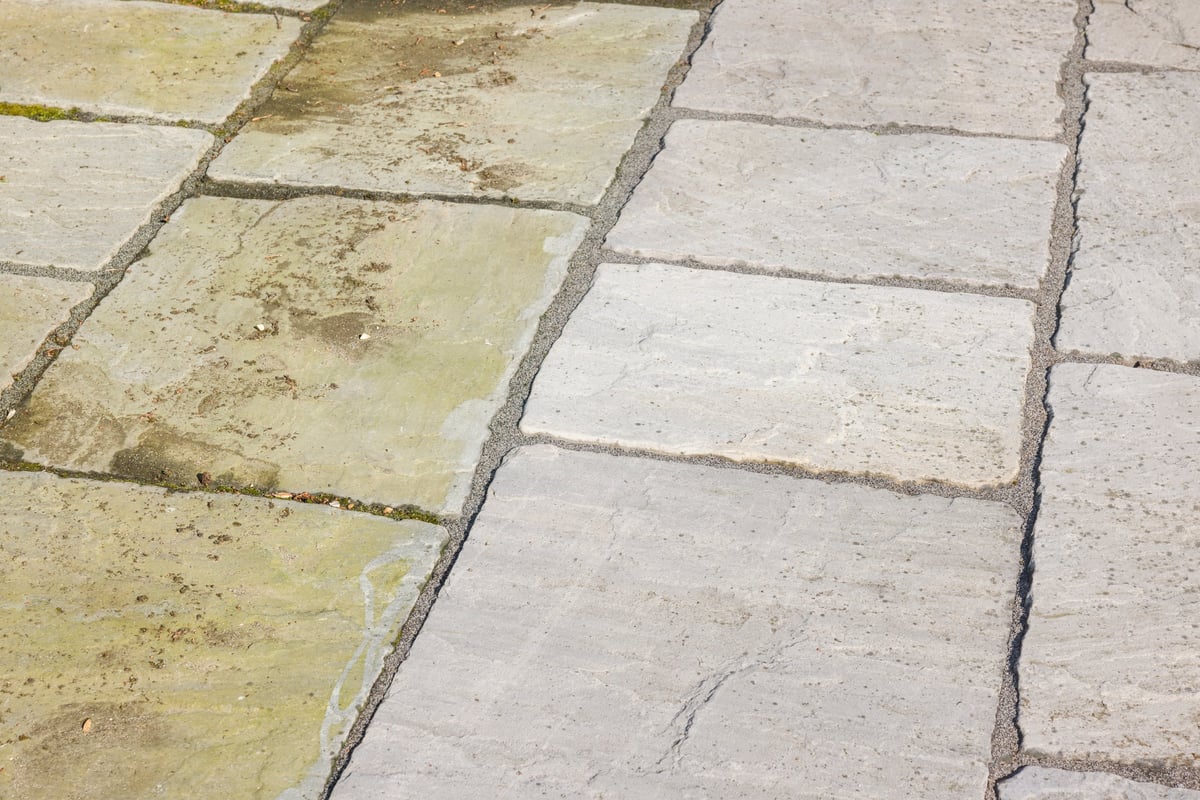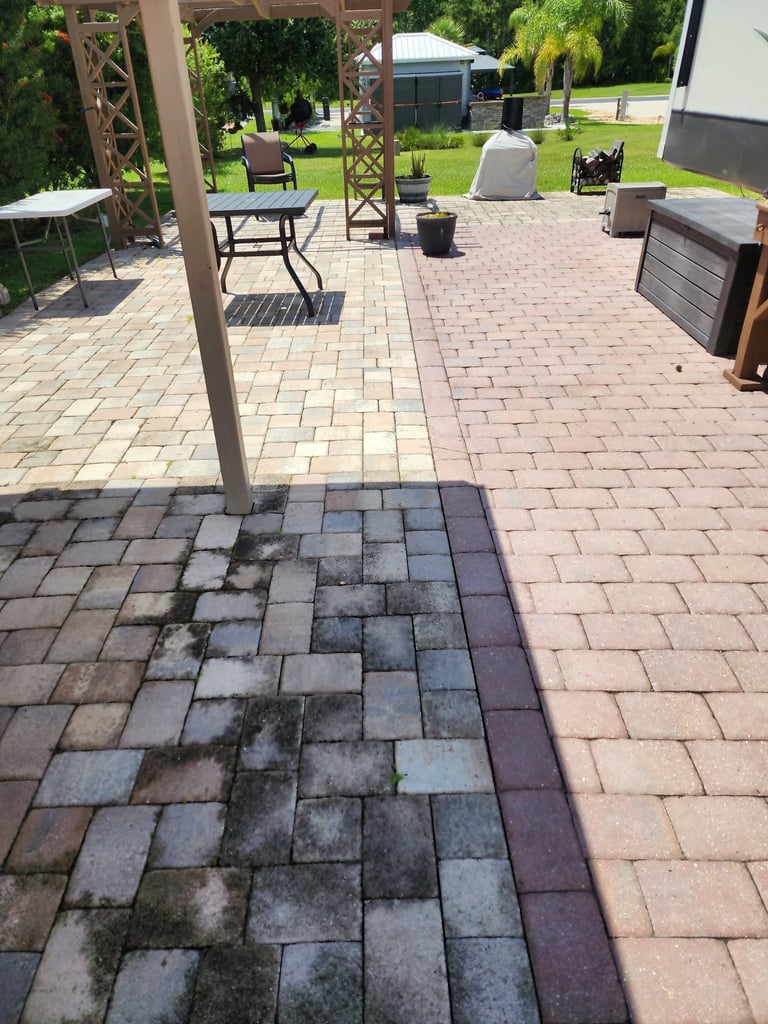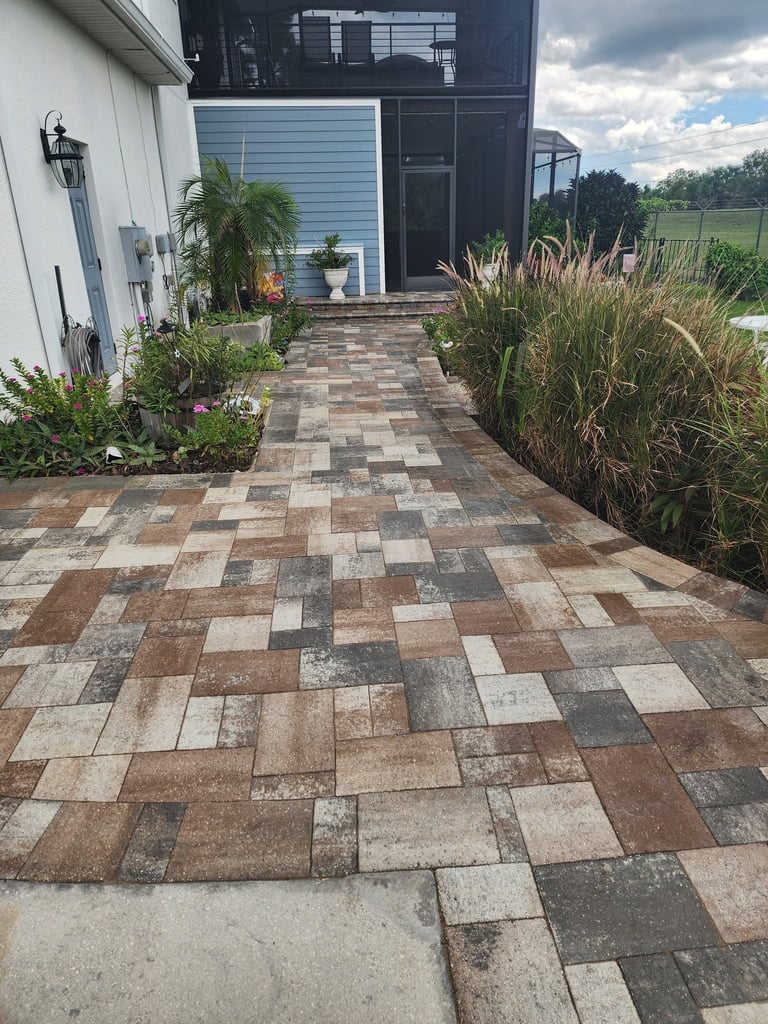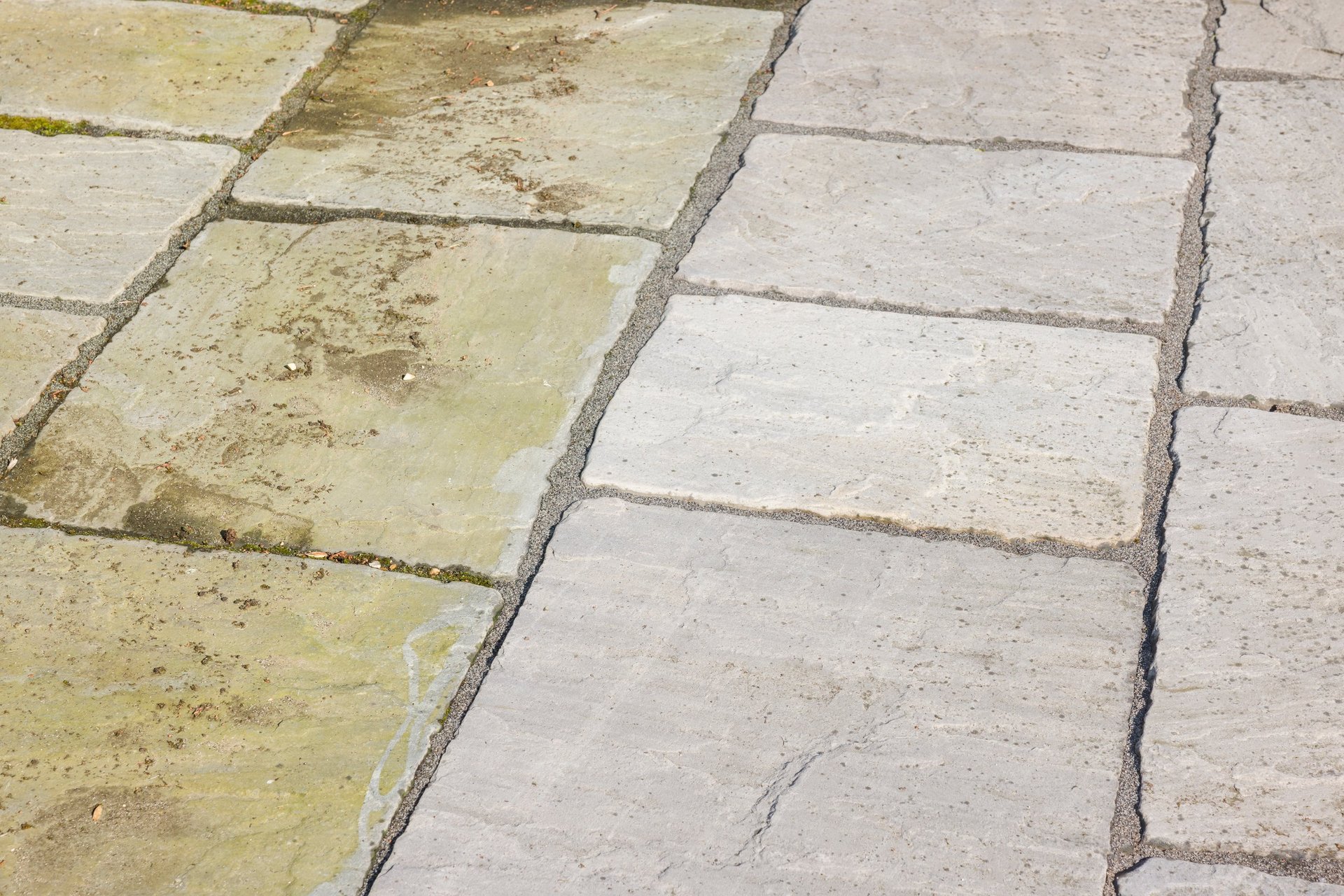
Patio and lanai pavers sit in shade and humidity, which makes them the first surface on a Florida property to grow algae and mould. S&S deep cleans, treats organic staining, re-sands the joints and seals patio pavers across Marion County, usually in a single day for a standard patio.
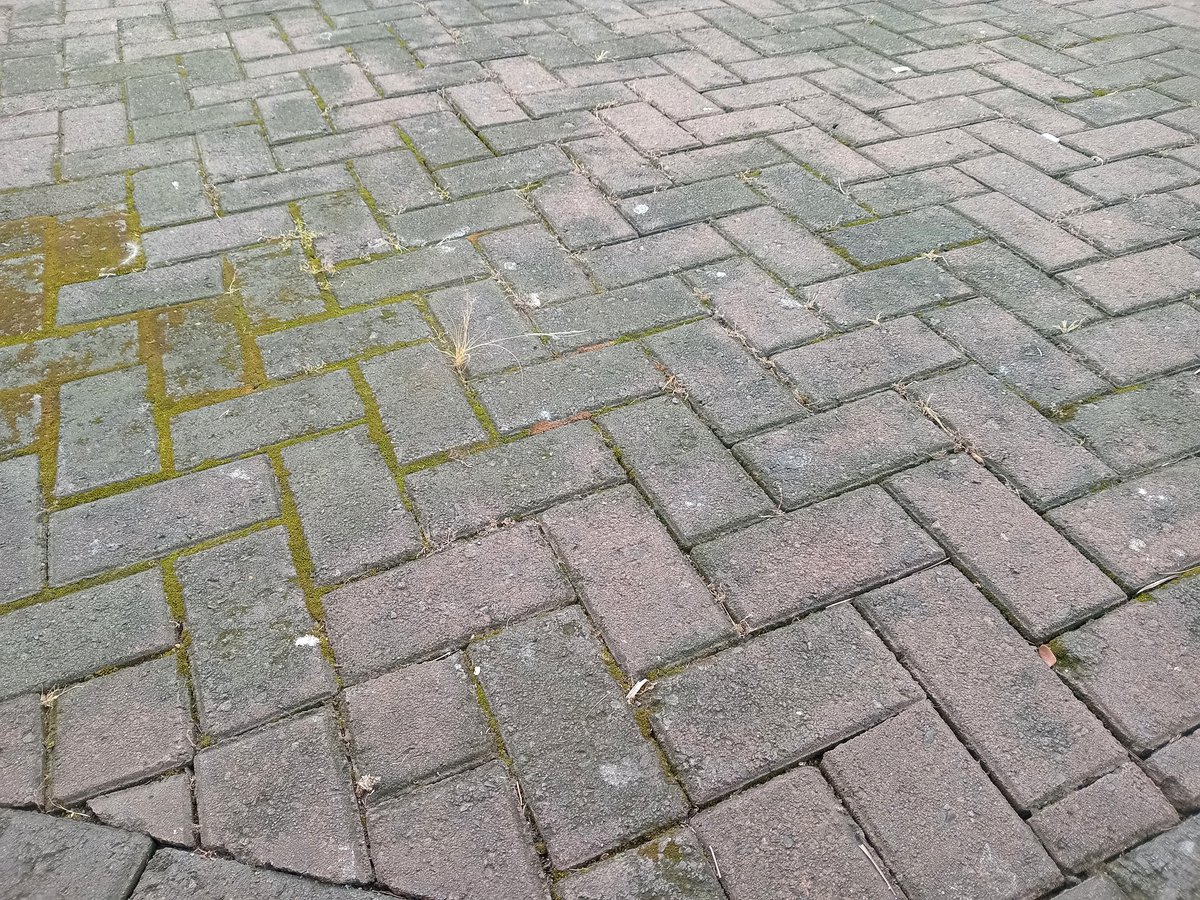
Fill out the form and we'll assess your patio or lanai. Most patios done in a single day. Quote in 24 hours.
Prefer to call us directly?
352-789-0363A patio is the one paver surface that never dries out properly. Here's why yours turns green and black faster than your driveway.
Patios under roof overhangs, lanai screens or mature trees sit in shade for most of the day. Morning dew and Florida humidity keep the surface damp for hours after sunrise. Algae only needs shade and moisture to grow — and a covered patio gives it both, year round.
A screened lanai reduces airflow. Water from rain, irrigation or humidity gets in but dries slowly. The screen itself casts partial shade. The result is a microclimate that's perfect for mould and mildew. This is the number one complaint we hear from homeowners in Marion County's 55+ communities.
Properties in heavily treed areas like Dunnellon and Rainbow Springs have the worst algae problems. The live oak canopy blocks direct sun all day. Paved surfaces under oak canopy may see direct sunlight for less than two hours a day. That's not enough to dry the surface, and algae takes full advantage.
The fix: deep cleaning strips the organic growth off. Sealing creates a surface that sheds water faster and dries quicker. Less standing moisture means less algae.
Working inside a screen cage changes the whole job. You can't just pressure wash full blast — you'll damage the screening and soak everything inside. Here's how we handle it.
We angle spray away from the screen panels and use lower pressure around the enclosure edges. The screening stays dry and undamaged. This takes more time than an open patio, but it's the only way to do it without ripping mesh or soaking the frame.
We work around fixed items like outdoor kitchens, built-in seating and pool equipment. Anything movable gets shifted to one side while we work on the other, then swapped. Nothing leaves the enclosure unless you want it to.
The bottom track of a screen enclosure is where algae builds up worst. Water pools there, dirt collects, and it never sees sun. We pay extra attention to the edges and the track line during cleaning. Once sealed, water sheets off instead of pooling in the corner.
If you've lived in Florida for more than a year, you know about lovebugs. Twice a year they arrive by the millions. Their bodies splatter on surfaces and their residue is surprisingly acidic. Here's why a sealed lanai handles lovebug season far better than an unsealed one.
Lovebugs come in two waves: May and September. Each wave lasts about four to five weeks. During that time, dead lovebugs accumulate on every outdoor surface. If the pavers are unsealed and porous, the acidic residue from decomposing lovebugs etches into the surface within days.
On sealed pavers, lovebug residue sits on top. A quick hose-down or damp mop lifts it off. On unsealed pavers, the residue soaks into the porous surface, leaving faint stains and discolouration that build up year after year. The seal creates an easy-clean barrier.
You'll see small speckled discolouration, usually lighter than the surrounding paver. It looks like acid etching, which is exactly what it is. The marks are permanent on unsealed pavers. A sealed surface prevents the acid from ever reaching the paver.
Timing tip: seal your lanai in spring before the May swarm. By September, the seal is fully cured and the surface is as resistant as it will ever be.
500+ patios and lanais across Marion County. Algae gone, colour back, sealed to stay that way.
Under live oak canopy with a screen enclosure. Pavers were black with mould and green with algae. The homeowner couldn't walk barefoot.
Deep cleaned inside the screen cage, re-sanded and sealed with a matte finish. One day. Now the favourite room in the house.
"Our lanai was so green we'd stopped using it. The pavers were slick and it smelled like mildew. S&S cleaned and sealed it in one day. Now it's dry, clean and we're back out there every evening."
— Homeowner in Rainbow Springs, FL
Get answers to common questions about patio and lanai paver sealing.
We deep clean the entire surface first, which strips off algae, mould, dirt and any old sealer residue. Then we treat any remaining organic staining with targeted cleaning. Once the surface is clean and dry, we seal it. The seal creates a surface that sheds water faster and stays drier, which is what stops algae and mould from returning.
Yes. We work inside screen enclosures regularly. We adjust our spray pressure and angle to avoid damaging the screening, protect the track area and work around fixed furniture and fixtures. The screen panels stay clean and undamaged. It takes a little longer than an open patio, but the result is the same.
A standard patio or lanai is usually done in a single day. That covers cleaning, treating any stains, re-sanding the joints and applying the sealer. Larger patios and lanais with multiple levels or extensive staining may take a second day. We'll confirm the timeline during the on-site assessment.
Yes, for years. The seal creates a surface that water sheets off instead of soaking into. Less standing moisture means less algae. On patios under heavy live oak canopy or inside screen enclosures with limited airflow, some algae may eventually return around the edges. Resealing on schedule keeps the whole surface protected.
No. Sealed pavers feel the same temperature as unsealed pavers in direct sun. The finish option you choose (wet look, matte or natural) does not change how hot the surface gets. The seal protects the colour and the joints. It does not make the pavers hotter than they already are in a Florida summer.
Yes, and it's much easier than on unsealed pavers. Lovebug residue sits on top of the seal instead of soaking into the porous paver surface. A garden hose or a quick mop lifts it off. On unsealed pavers, lovebug residue etches in and leaves permanent speckled staining. This is one of the biggest practical benefits of sealing a lanai in Florida, especially during the May and September swarms.
Related services:
Free on-site assessment. We'll tell you what's growing on your pavers and how to fix it for good. Most patios done in a single day.