What causes cloudy or white blushing?
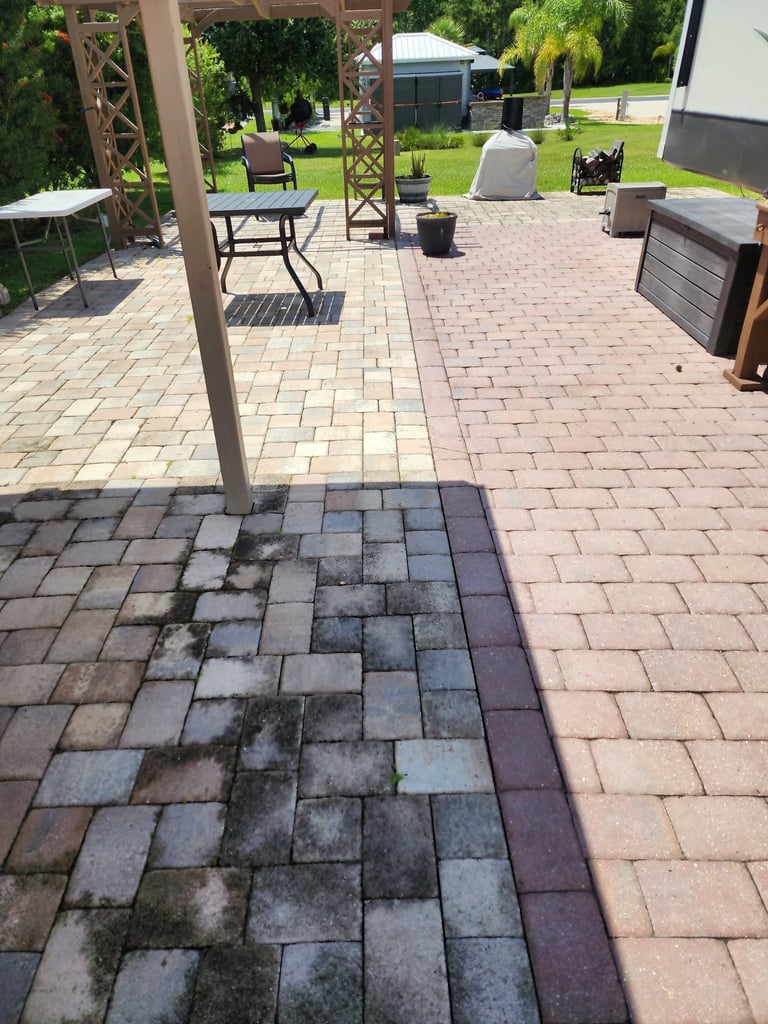
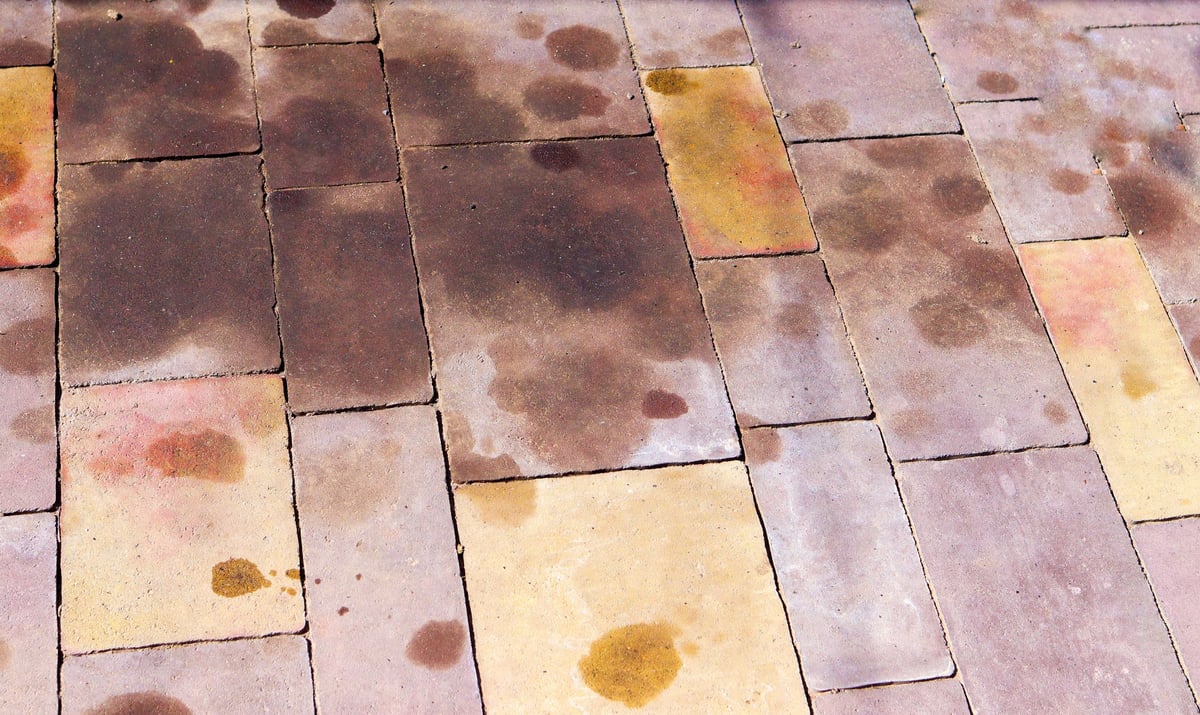
White blushing is trapped moisture. The sealer formed a skin on top before the underside could dry, so water got sealed in. The trapped moisture scatters light and turns the clear coating milky white.
It happens when sealer goes over pavers that are still damp from cleaning, when it goes on too thick in one coat, or when it was applied over dew. It also happens when the temperature or humidity was outside the sealer's working range.
The milky look does not dry out on its own. Once water is sealed in, it stays there. The only fix is to remove the cloudy coating and start again on a dry surface.
What causes peeling and flaking?
Peeling is a bonding failure. The sealer never locked onto the paver surface, so it starts lifting away in sheets and flakes.
The two biggest causes are a dirty surface and applying too thick. If the pavers were not cleaned properly first, the sealer sticks to the dirt and not the paver. When that dirt lets go, the sealer peels with it. If the sealer was laid on too heavy, it cures unevenly and cracks away at the edges.
Peeling sealer is cosmetic at first, then becomes a real problem. Every bare patch is now unprotected pavers. Water, oil and UV start attacking those spots while the rest of the surface still looks coated. The patchy look only gets worse.
Why does this happen so often in Florida?
Florida has three conditions that fight against a clean seal: high humidity, afternoon storms, and sealing too soon after cleaning.
In Marion County the humidity runs high most of the year. A surface can look dry to the touch while still holding moisture in the pores. Sealer over that trapped moisture is exactly how you get white blushing.
Afternoon thunderstorms are just as bad. In summer you can count on a downpour most days between 3pm and 6pm. If a coating is still curing when that rain hits, it will bloom white or wash off in patches.
Sealing too soon after cleaning is the third common mistake in Ocala, Silver Springs Shores and The Villages. Pavers need time to fully dry after a wash before any sealer goes down. A crew that rushes wet pavers into the coating is setting up a failed job from hour one.
Can it be fixed, or do the pavers need replacing?
It can almost always be fixed. The pavers themselves are rarely damaged. What failed is the coating on top of them, and that coating can be removed.
Replacement only makes sense if the base under the pavers has failed too, which is a different problem than cloudy sealer. A cloudy or peeling seal is a surface issue. The block underneath is almost always still sound.
The short answer: if your only problem is a cloudy, white or peeling finish, you do not need new pavers. You need the old coating stripped and a clean reseal done right.
What stripping and resealing involves
Stripping a failed seal is a longer job than sealing from fresh, because the old coating has to come off completely before anything new can go on.
First we strip the old sealer. Then we clean the surface down to bare paver so nothing sits between the block and the new coating. Joints get re-sanded where they have washed out. Then, and only then, does the fresh sealer go down on a completely dry surface.
The weather window matters on a strip and reseal. We check the forecast and schedule around the humidity. We will not reseal a surface that is still holding moisture, because that is how the clouding happened in the first place.
How to avoid it happening again
The best way to avoid a second failed seal is to start with a dry, clean surface and apply the coating in thin, even coats within the sealer's working range.
Do not seal over damp pavers. Do not seal in summer humidity on a day with afternoon rain in the forecast. Do not let a coating go on too thick. Each of these shortcuts saves time on the day and costs years off the life of the seal.
The single biggest difference is prep. A properly cleaned and dried surface is what lets the sealer bond. Skip that, and the job is doomed no matter how good the coating is.
Free Quote in 24 Hours
Tell us about your pavers and we'll send you a clear quote within a day.
Or call us directly
352-789-0363