What is polymeric sand?
Polymeric sand is joint sand mixed with a binding additive that activates when it gets wet and then hardens as it dries. Once set, it forms a firm fill between the pavers that resists weeds, ants and washout far better than plain sand.
The catch is the cure. Polymeric sand needs a specific window of dry weather to set properly. If rain hits it mid-cure, or if too much or too little water is used during activation, the bind does not form the way it should. That is where Central Florida's afternoon storms become a real problem.
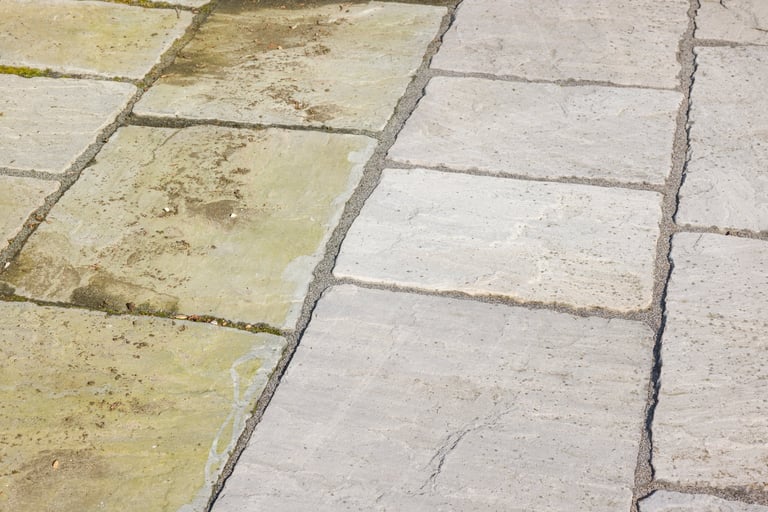
When it works, it is a strong joint. When the weather works against it, the result can be hazing on the paver face and an incomplete set that has to be redone.
What is silica or joint sand?
Silica sand, often called joint sand, is plain sand swept into the joints between pavers. It is the traditional fill and it has no binder. It stays loose after installation.
Because it stays loose, silica sand is forgiving. It tolerates moisture during installation, because there is nothing to cure or set. It also allows a little movement, which suits older surfaces that flex slightly with temperature and traffic.
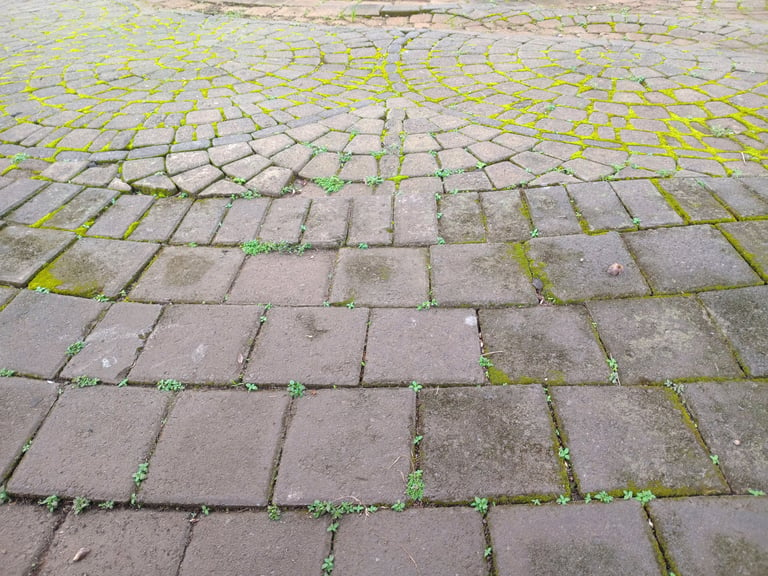
The downside is that loose silica sand washes out and invites weeds and ants back over time. On its own, it is the weakest of the three options in Marion County conditions.
What about sand with a stabilising sealer?
Stabilised sand is silica joint sand sealed after installation. The sealer soaks into the sand and binds the grains together from the surface down. Once it sets, the sand holds in place and resists washout, weeds and insects.
This is the more forgiving option for Marion County. It does not have the same strict dry-cure window as polymeric sand, so an afternoon storm is less likely to ruin the job. It is also easy to top up and repair without stripping the whole joint.
For most driveways, patios and pool decks in Ocala, Silver Springs Shores and The Villages, stabilised sand is the choice that survives the rainy season without the risk of a botched cure.
Why Florida humidity changes the answer
Florida humidity changes everything about how joint material sets. The air never fully dries during the summer, and the June to September pattern brings a hard afternoon storm almost every day.
Polymeric sand needs a consistent dry window to cure. A pop-up storm at 4pm, right after installation, can wash the binder out before it has set. The paver face then dries with a white haze, and the joint does not reach full strength. In Marion County's rainy season, that window is hard to guarantee.
Stabilised sand does not face the same risk. The sealer is applied after the sand is in, and it sets on its own schedule. The sandy, free-draining soil underneath wicks moisture away instead of holding it against the joint. That is why we adjust the material choice per job based on the season we are installing in.
Which is right for driveways, patios and pool decks
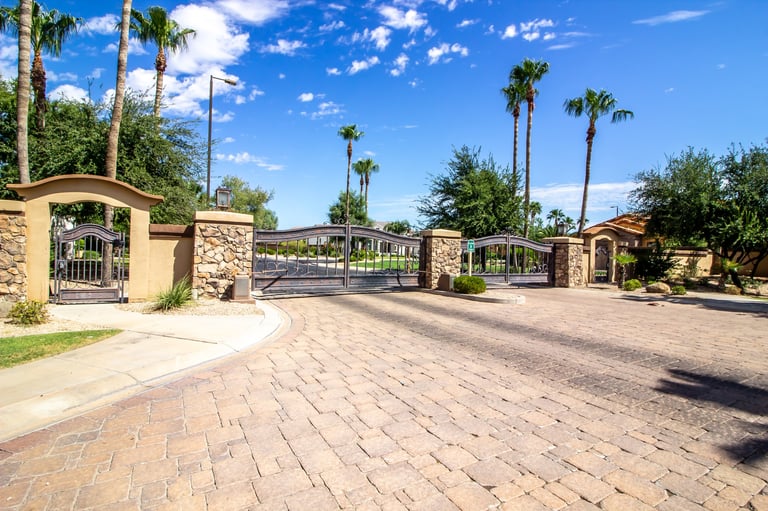
Driveways take vehicle weight and constant sun, so they benefit from a strong, stable joint. Patios are usually flatter and lower traffic, but they still need weed and ant resistance. Pool decks deal with water, chlorine and bare feet, so the finish matters as much as the strength.
The material is chosen per surface. A flat, shaded pool deck in Belleview is not the same as a sloped, sun-baked driveway in Marion Oaks. We look at the slope, the drainage, the age of the pavers and the season, then pick the joint material that will hold through the next rainy season.
There is no single answer that fits every property. The right joint is the one that matches how that specific surface is used and how it drains.
What happens when polymeric sand is installed wrong
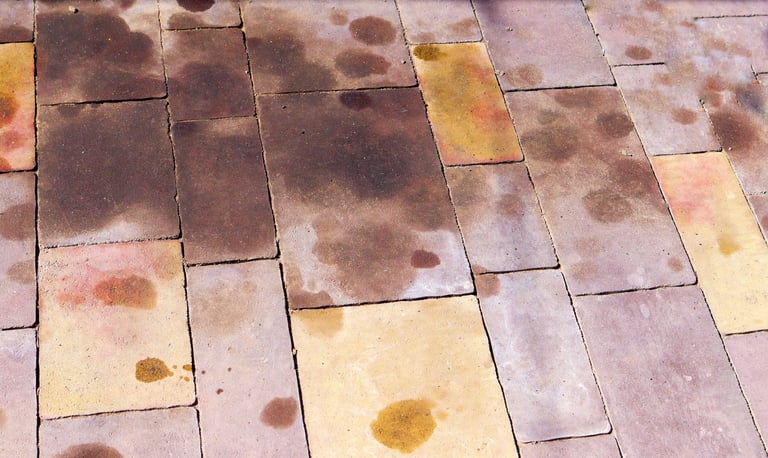
A botched polymeric install shows up in three ways. The most common is hazing, a white film left on the paver face when the binder was activated with too much water or washed across the surface before setting.
The second is hardened residue stuck to the face of the paver. That happens when the sand is not fully swept off the surface before activation, so the leftover grains bond to the top of the paver instead of staying in the joint.
The third is an incomplete set. If rain interrupts the cure, the joint hardens only partway and stays crumbly underneath. The result looks set on top but reopens within a season. All three are avoidable with the right timing and the right install, which is why the material choice matters as much as the technique.
Free Quote in 24 Hours
Tell us about your pavers and we'll send you a clear quote within a day.
Or call us directly
352-789-0363