Where is my paver sand actually going?
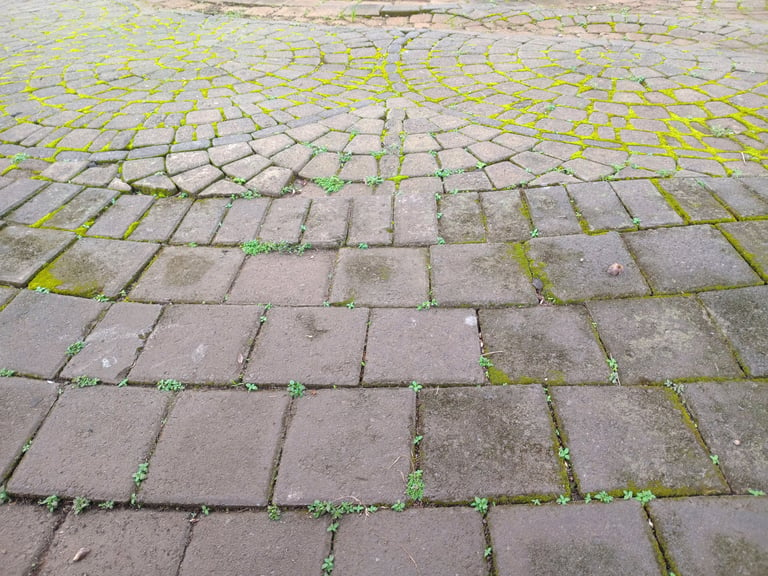
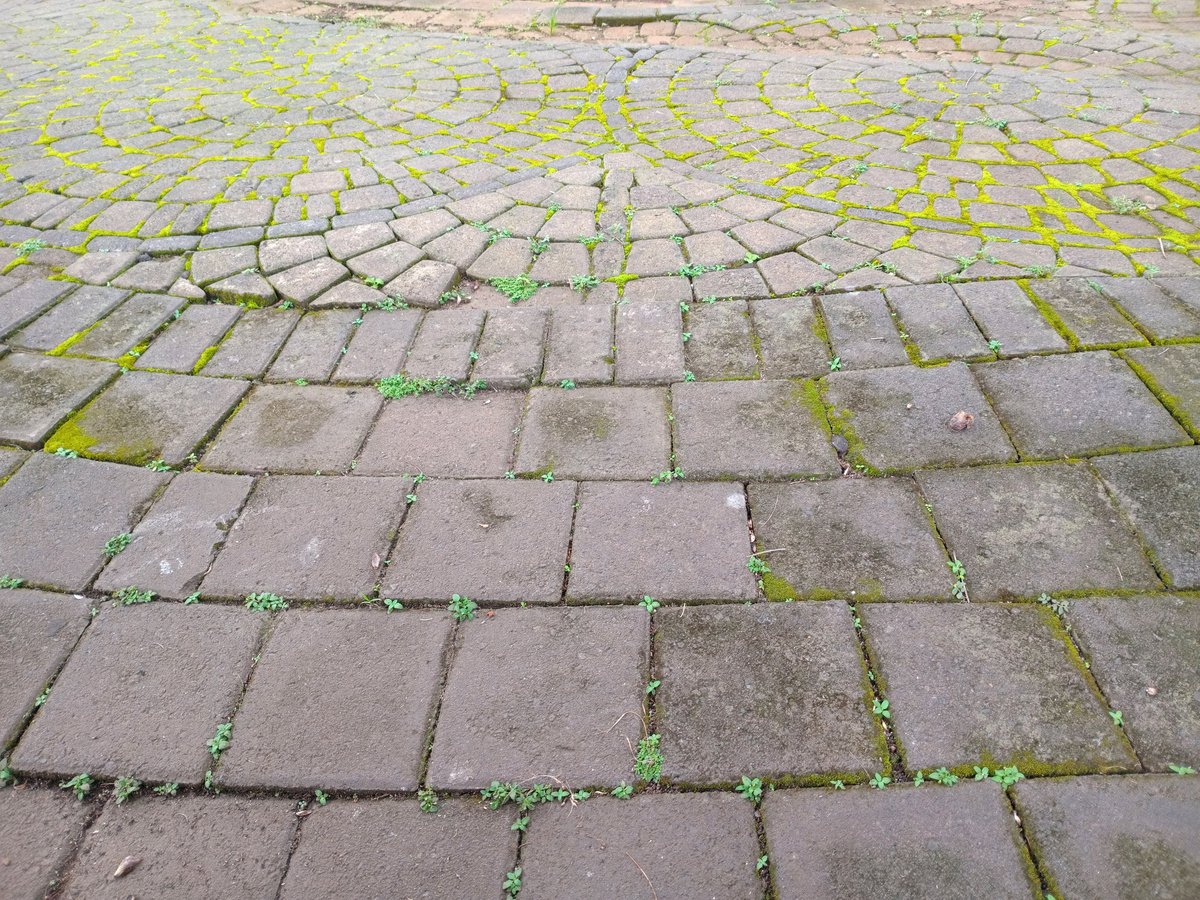
The sand is washing down and out. It moves sideways and down through the joints, then runs off with the water onto the street or into the surrounding soil. You can usually see it collecting at the low edge of the driveway after a heavy rain.
It is not vanishing into the base. The sand between the pavers is separate from the base underneath. When joints empty out, that surface sand is being carried away on top of the paver, not sinking down through it.
The tell is the fine dust trail. After a storm, look for a pale wash of sand at the bottom of the slope or around the drain. That is your joint sand leaving the surface.
Why Marion County soil makes this worse
Marion County sits on sandy, free-draining soil. Water moves through it fast. That means water on a paver surface has somewhere to go, and it takes the loose joint sand with it.
In areas like Ocala, Marion Oaks and Silver Springs Shores, the ground does not hold water. It drains straight down. Every storm or irrigation cycle flushes a little more sand out of the joints and down into that fast-draining soil.
This is not a problem you caused. It is the landscape you are built on. The fix works with that soil rather than against it.
Does the rainy season make it worse?
Yes. June through September brings afternoon storms that drop a lot of water in a short window. The volume and speed of that water is what moves sand.
A steady light rain does not shift much. A hard Florida downpour sheets water across the surface fast, and that sheet picks up loose sand as it goes. After a few months of daily storms, joints that were full in May are noticeably low by September.
In The Villages and along the SR 200 corridor, this shows up every season. Homeowners see it around August, right at the peak of the storm pattern.
Is pressure washing blowing my sand out?
Yes, at the wrong pressure. A pressure washer aimed directly at a joint will blast the sand straight out of it. This is one of the fastest ways to empty a joint.
A surface-level wash at a lower pressure with a fan nozzle is generally fine. The problem is a zero-degree nozzle or too much pressure held too close. That strips the joint sand and then leaves the paver edges exposed.
If you have been pressure washing your own pavers for a few years and the joints are low, the washer is likely part of the cause. The other part is the rain and irrigation doing the same thing more slowly.
Why are my pavers rocking?
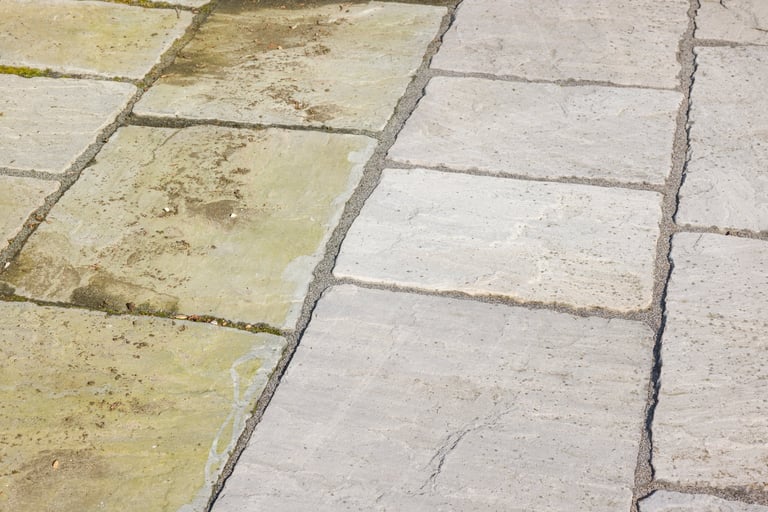
Rocking usually means the joint sand has washed out and the pavers have lost their lateral lock. Without sand packing the gaps, each block can shift slightly when you walk or drive on it.
That is different from a base failure. When the base underneath has eroded, the paver sinks and the whole area sags. When only the joint sand is gone, the paver stays at grade but rocks or shifts side to side.
Here is how to tell the difference. A rocking paver that is still level with its neighbours is a joint sand problem and is fixable in a day. A paver that has dropped lower than the ones around it is a base problem and needs the block lifted and the base repaired.
In places like Belleview, Ocklawaha and Fort McCoy, we usually see the first kind: rocking from washout, not from a failed base. That is the cheaper, faster fix.
The permanent fix
The permanent fix is stabilising sand, sealed in place. Stabilising sand hardens when it sets, so it stays in the joint instead of washing out. A sealer over the top then locks the whole surface down.
The process is straightforward. The joints are cleaned out, the stabilising sand is swept and compacted in, and once it has set the surface is sealed. The sand can no longer flush out because it is now a solid fill rather than loose grains.
This is not a patch job that needs redoing every storm season. It is the difference between living with low joints year after year and having a surface that holds its sand through the Florida rain.
Free Quote in 24 Hours
Tell us about your pavers and we'll send you a clear quote within a day.
Or call us directly
352-789-0363