Why do ants nest between pavers?
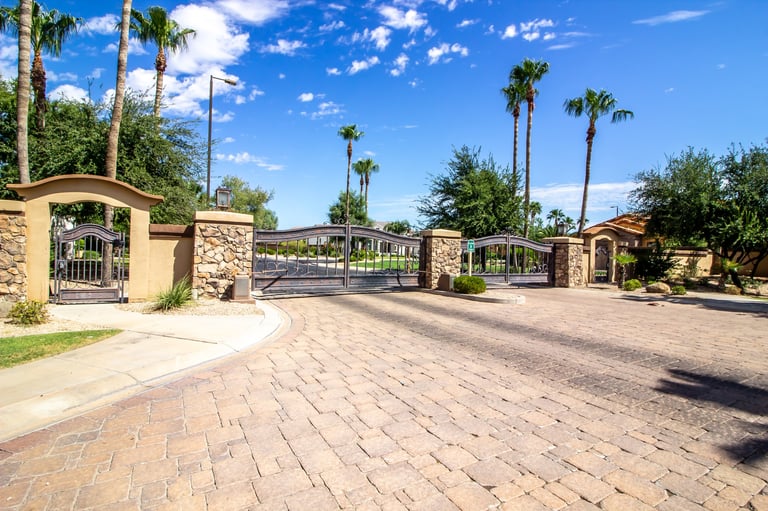
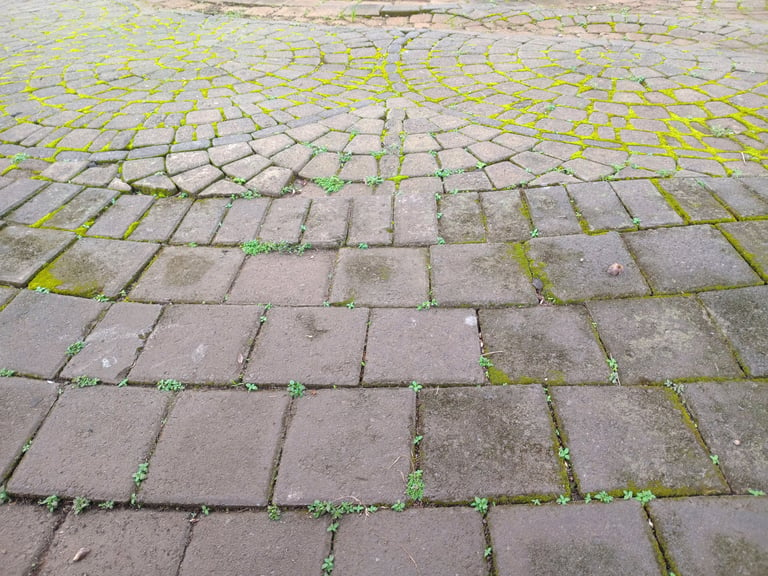
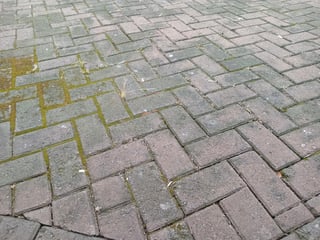
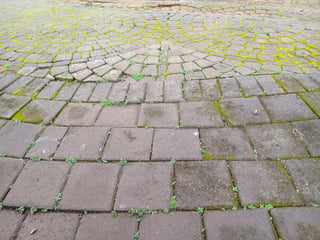
Ants nest between pavers because the joint sand is loose and easy to move. Loose sand is soft, light and dry, which makes it perfect for excavating a colony. The paver slab above holds heat and sheds water, so the gap underneath stays warm and protected.
The joint is the entrance, not the whole nest. The ants carry the sand grains out through the gap and pile them up around the edge. That pile of sand on your patio is not a mess the ants made by accident. It is the joint sand being excavated.
The more the ants dig, the more sand they move, and the looser the surrounding joint becomes. One ant hill leads to more, because the empty joints invite the next colony in.
Why is this so common in Marion County?
Marion County has sandy, free-draining soil and warm weather almost all year. That combination is exactly what fire ants and ground-nesting bees look for.
Fire ants love the warm, dry, loose sand under a paver surface. The slab keeps the colony warm through the cooler months and dry through the rainy season. In places like Ocala, Silver Springs Shores and Marion Oaks, they will move in wherever unstabilised joint sand gives them a start.
Ground-nesting bees are drawn to the same conditions. They burrow into loose, bare patches between pavers and along the edges. The problem is the same at its root: loose material that is easy to dig into. Remove that material and the nesting site disappears for both.
Why does bait and spray only work temporarily?
Bait and spray kill the colony that is there now. They do nothing to the loose sand the colony was living in. The nesting site is still exactly the same after the ants are gone.
A new colony finds the empty joint within weeks. The loose sand is sand still there, soft and easy to excavate, and the slab above is still warm and protected. You have not removed the reason the ants came. You have only cleared the current residents out of a very desirable home.
This is why the problem comes back again and again in Belleview, Ocklawaha and Fort McCoy. Homeowners treat the ants, the ants return, and the cycle repeats. The only way to stop the cycle is to take the nesting site away.
Does the sand damage matter, or is it just cosmetic?
It matters. The sand the ants carry out is the same sand that was locking your pavers together. Every mound on the surface is sand that has left the joint.
As the joints empty, the pavers lose their lateral lock. They start to shift and rock when you walk or drive on them. Gaps widen, water gets in, and the whole surface begins to loosen. What starts as an ant problem turns into a movement problem.
So it is not just a cosmetic mess to sweep away. The ant hills are a sign the joint sand has already failed. The sand keeps washing and shifting because it was never stabilised, and the ants are simply taking advantage of that.
The permanent fix
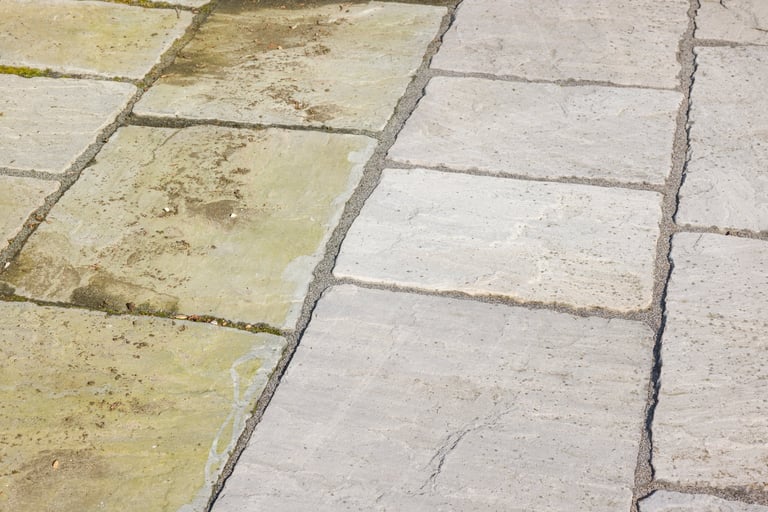
The permanent fix is to remove the loose, failed sand and replace it with stabilising sand, then seal the whole surface. Stabilising sand sets hard, so the ants cannot excavate it. Once it is set and sealed, there is no loose material left for them to dig through.
The process is the same every time. The joints are cleaned out, the old loose sand is removed along with any nests, the stabilising sand is swept and compacted in, and once it has set the surface is sealed. The paver surface locks back together and the ants lose their home.
This is the difference between treating ants forever and removing the reason they come. Fix the sand and the ant problem stops at the source.
Free Quote in 24 Hours
Tell us about your pavers and we'll send you a clear quote within a day.
Or call us directly
352-789-0363